Thanks to Hollywood and stage shows, hypnosis has a reputation for swinging pocket watches, mind control and people clucking like chickens. It’s time to put that story to bed, because the real one is far more interesting.
Away from the spotlight, hypnosis has quietly become a hotbed of serious research. Scientists have tested it for everything from chronic pain and IBS to surgery nerves, insomnia and quitting smoking. And they have all found one thing: it works.
And for anxiety, the results are especially hard to ignore. Controlled studies consistently show that hypnotherapy reduces anxiety, with effects that are large by psychotherapy standards and that often keep improving after treatment ends.
That matters, because anxiety is one of the most common reasons people seek help, and many want options beyond medication or talk therapy alone. Hypnotherapy of often one of them. So what does the evidence actually show? Let’s dive in.
What the Research Shows
In 2019, researchers did something nobody had done before: they pooled the controlled trials on hypnosis for anxiety and crunched the numbers together (Valentine et al., 2019). The verdict? By the end of treatment, the average person who had hypnosis was less anxious than about 79% of people who didn’t.
But here’s the cool part: it kept working.
Most of us know the feeling of a good workshop fading by the following week. Hypnosis seems to do the opposite. In trials that checked back in later, the benefit grew: the average hypnosis participant was then calmer than about 84% of the comparison group. In my experience, that’s because the changes keep settling in at a subconscious level long after the session ends, and clients keep putting what they’ve learned into practice in everyday life.
The study also found hypnosis significantly improved other psychological approaches when added as an adjunct treatment. An earlier review of 18 studies agreed: adding hypnosis to cognitive behavioural therapy (CBT), for instant, left the average client better off than at least 70% of those who had CBT alone (Kirsch et al., 1995).
That’s why I don’t treat hypnosis as a solo act. I pair it with NLP, the Lefkoe Method and other modern psychological tools. In my experience, these techniques land even more deeply when the mind is relaxed, focused and open to new possibilities, which is exactly the state hypnosis creates.
Where hypnosis really shines:
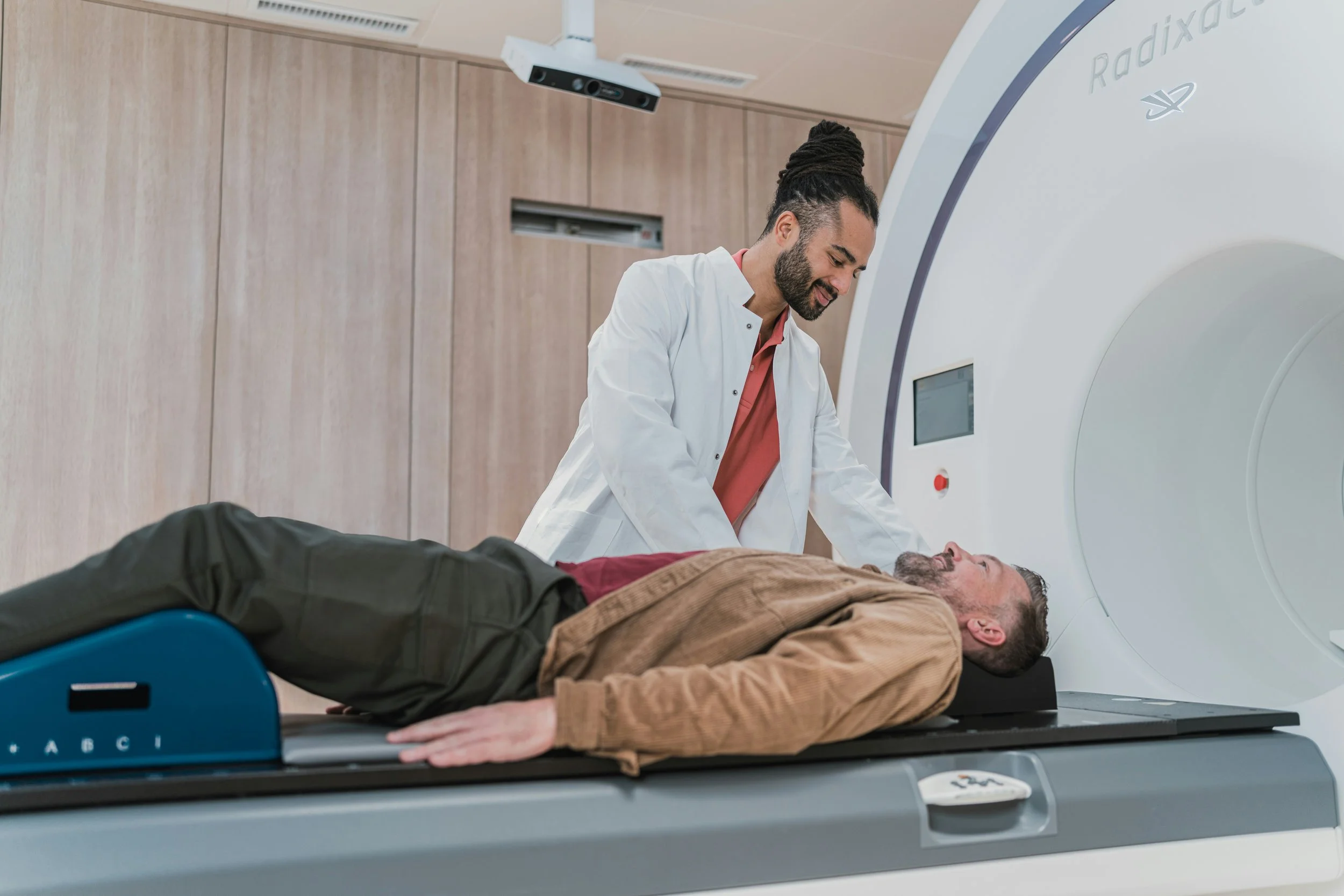
Surgery, scans, needles: these are moments when even the calmest mind starts writing worst-case scenarios. They’re also where hypnosis has been tested most. A 2024 review of 49 reviews found patients who had hypnosis before a procedure were typically calmer than 70–80% of those who didn’t. A 2025 review in Anaesthesia agreed.
My favourite example comes from Yale. Surgery patients had either a hypnosis session, an equal amount of attention without hypnosis, or standard care. As they were wheeled into theatre:
Hypnosis: anxiety dropped 56%
Attention only: anxiety rose 10%
Standard care: anxiety rose 47%
While everyone else got more nervous, the hypnosis group got calmer (Saadat et al., 2006).
And it’s not just the operating theatre. The same pattern shows up in cancer care, the dentist’s chair and the exam hall. Different settings, same villain: a feared moment you can see coming. Hypnosis seems especially good at stopping that “what if” spiral before it gathers speed.
Under the hood: what happens in the brain?
For a long time, hypnosis was a bit of a black box: it worked, but nobody could see why. Brain scanners have changed that. In 2016, a team at Stanford University took about 545 people, slid them into a brain scanner, and watched what happened during hypnosis (Jiang et al., 2016). Four things showed up, and the implications for anxiety are very interesting indeed.
1. The brain’s alarm system turned down the volume.
An area called the dorsal anterior cingulate acts like the brain’s smoke detector, constantly scanning for threats and anything that might need your attention. During hypnosis it quietened, and people became so absorbed in the moment that the usual background worry faded away.
2. The mind and body started talking more.
Connections strengthened between the part of the brain that plans and directs (the prefrontal cortex) and the part that tracks what’s happening inside your body (the insula). This helps explain why guided imagery and suggestion can have such a real effect on the body: settling a racing heart, a tight chest or a churning stomach.
3. The inner critic took a break.
The link between doing something and watching yourself do it loosened. Normally, part of the brain keeps up a running commentary: How am I coming across? What if I get this wrong? During hypnosis, that commentary went quiet. It’s like dancing when nobody’s watching, or getting so lost in a good book you forget you’re reading.
4. The old story loosened its grip.
Beyond in-the-moment self-checking, anxiety tends to lock us into a bigger story about who we are: I always panic. I can’t cope. This is just who I am. The study found hypnosis turns down activity in the brain’s default mode network, the network that builds that “story of me.” Researchers suspect this can loosen habitual patterns of thought, creating space to step outside the story and see things from a fresh angle.
So why does this matter for anxiety?
Put those four together and you get a pretty good description of relief: a quieter alarm, more say over what your body is doing, a break from constant self-checking, and room to see yourself differently. Anxiety is usually the opposite: an alarm stuck on high, a body with a mind of its own, a commentary that won’t switch off, and a story that feels set in stone. Hypnosis gives the brain a chance to experience a different way of working. And like any skill, the more often that calmer state is practised, the more familiar it becomes.
So, about that pocket watch.
After decades of controlled research, the picture is clear: hypnotherapy consistently helps people feel less anxious. The effects are large by psychology standards, they tend to last after the sessions end, and side effects are extremely rare. The old Hollywood version of hypnosis, with its mind control, clucking chickens and swinging watches, can finally be put to bed. The real story is quieter, more scientific, and a whole lot more useful.
So if anxiety has been running the show for a while, you’re not stuck with it. Anxiety is an alarm, and alarms can be turned down. That’s what my Resolve Anxiety Program is built around: combining hypnotherapy with proven psychological tools to help you break the cycle and build the capacity to handle whatever life throws at you.
No pocket watch required. Book a free chat and let’s talk about what’s possible.

Ready to take the first step?
I’m Lucas Lindblom, a registered clinical hypnotherapist with a background in psychology based in Thornbury, Melbourne. If you're tired of managing the same symptoms and want to explore a different approach, let's have a conversation about what’s possible. Book a free, no-obligation chat to discuss your situation and find out whether hypnotherapy is right for you. Sessions are available both in person and online.