How to Escape the Anxiety Trap
Anxiety as Overwhelm
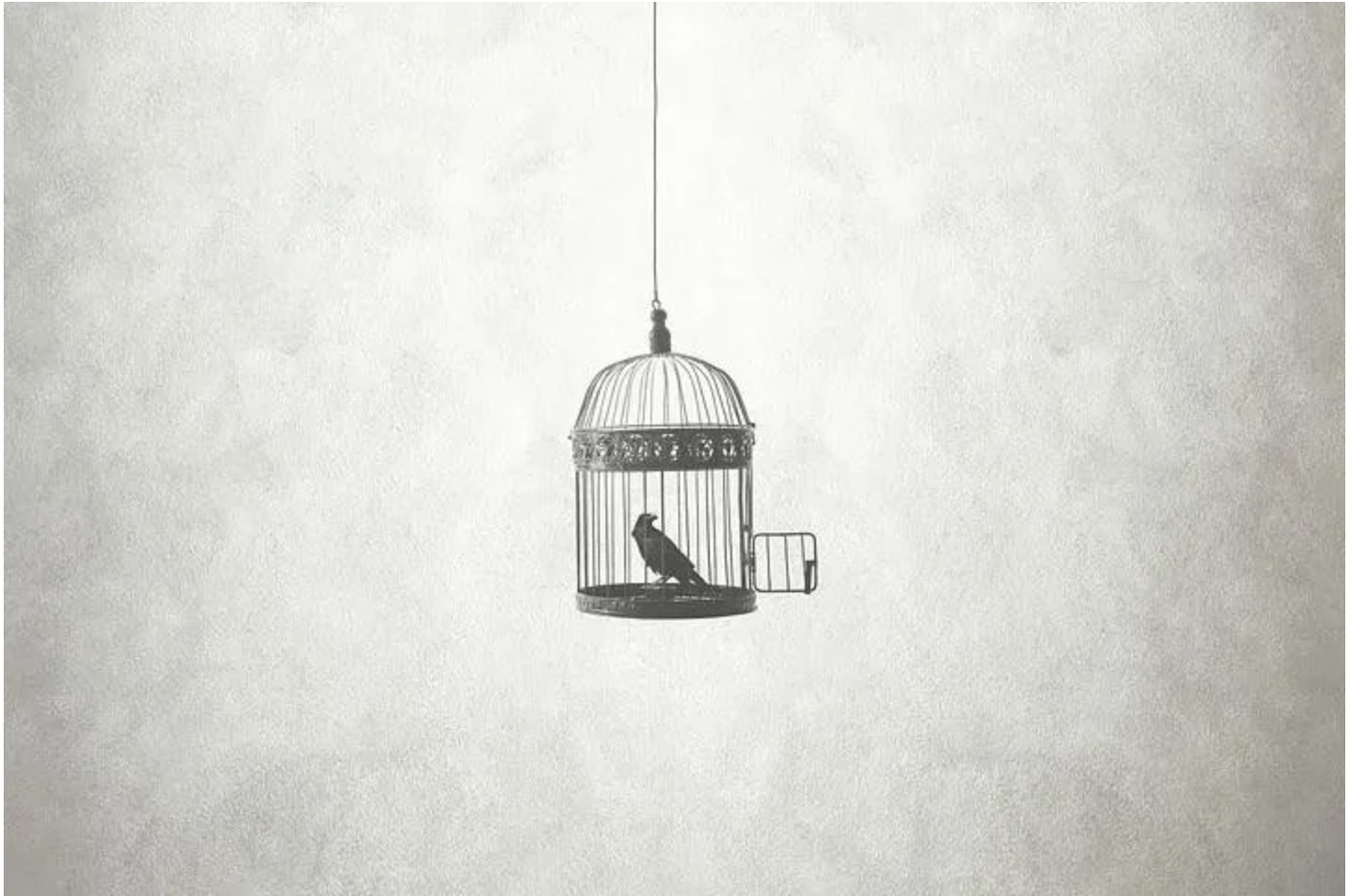
A very useful way to think about anxiety is as a state of overwhelm. That is, you currently don’t have the coping mechanisms to deal with a situation in your life, and the anxiety is asking you to retreat to a safe place where you can gather better resources. It’s the underlying sense of “I can’t handle this”.
With hypnotherapy, I help my clients update their subconscious with better coping mechanisms, so whatever the situation is, they can handle it more effectively. There is, however, a very powerful technique you can practise on your own to reduce overwhelm. And that’s what I intend to share with you in this blog.
Disclaimer: This technique isn’t appropriate if there’s a genuine threat in your environment - such as a toxic workplace, an abusive relationship, being significantly overwhelmed, or a physical health issue that needs attention. It’s designed for situations where you’re safe, but anxiety is still present or feels out of proportion to what’s happening.
The Anxiety-Fear Cycle
After experiencing an anxiety-provoking event, the way you respond to it is often what determines whether the anxiety settles down or turns into an anxiety disorder.
People who don’t develop anxiety disorders tend to let the sensations of anxiety rise, peak and then fall. They recognise they got through the situation, and then they move on.
People who develop anxiety disorders, however, tend to respond to the anxiety itself with fear. They think the emotion is too overwhelming, and try to push it away by any means they can.
When you react to anxiety with fear, it only creates more anxiety, and you get caught in a feedback loop. It goes something like this…
The anxiety gets triggered
You fear it’s too overwhelming
The anxiety increases
You become even more overwhelmed
That’s the anxiety-fear cycle. In essence, you have become afraid of the signal of danger that the subconscious is producing. And by responding with fear, it is telling the subconscious there is still a threat, and so it amplifies that signal (even when the actual threat is long gone)…It’s kind of like a microphone too close to a speaker - it picks up its own sound, amplifies it, and creates that loud screech.
And that’s very often how anxiety becomes chronic. Not because it’s permanent, but because the system gets stuck reinforcing itself. Such a simple but costly trap people fall into.
That’s why many people know that there is nothing inherently dangerous about the situations they are anxious about, whether it’s public speaking, elevators, leaving the house, or making a mistake - but they still become afraid. They are afraid of the sensations of anxiety.
Escaping the Trap
The most important thing to realise here is that it’s your reaction to the anxiety that keeps the anxiety-fear cycle going.
In Buddhism, it’s known as the “second arrow”.
The first arrow is the anxiety itself - the raw sensation and discomfort. The second arrow is the interpretation we add on top of it: “I can’t handle this,” “this is too much,” “this shouldn’t be happening,” “what if it gets worse,” etc. And it’s this second arrow - the fear, the resistance - that makes the anxiety feel far more overwhelming than it actually is, and feeds the anxiety-fear cycle.
Since the second arrow is driven by fear, we want to reduce the fear as much as possible.
One of the most effective ways to do that is to turn toward the anxiety and examine it closely - and to question whether it really is as bad as we’ve made it out to be. I know it sounds crazy, and it’s probably the last thing you feel like doing…but it’s a very powerful technique if applied over time. Here’s how it’s done.
Find a place where you can sit or lie down undisturbed for about 5-10 minutes. Close your eyes and tune into the anxiety.
Step 1: Say yes to the anxiety. Don’t try to push it away, fix it, or change it - say yes. Allow it to be there. By doing this, you’re reducing your resistance to the anxiety and taking back your inner authority.
Step 2: Remove the label “anxiety” and look at the direct characteristics of the sensations. Forget everything you’ve learned or been taught about anxiety - whether it’s good or bad, right or wrong, too much or too painful - and look at it with your own eyes. Don’t worry about the future or the past, just in this moment, what’s happening?
Step 3: Get curious. By being in a state of curiosity, you’re interrupting the anxiety-fear cycle, because you can’t be curious and afraid at the same time. Then ask yourself: what are these sensations, really? What are they made of? How do they function? Is it really that bad? Is it really true I can’t handle this? What you’ll find is that anxiety is actually made up of many different qualities like pulsing, tightness, pressure, tingling, heat and swirling sensations. You’ll also notice that they are moving - it’s not a fixed state that lasts forever. And while the sensations are uncomfortable, they are actually quite bearable.
Step 4: Recognise you can handle it. Try to get really, really close to the sensations, and look at them directly. Because what often seemed like extreme discomfort is revealed to be much more bearable than you previously realised. It’s not uncommon for my clients to report that what initially felt like a 9/10 level of discomfort now feels like a 6/10 - or even lower. Why? Because they’ve removed the second arrow and are simply observing the direct nature of the sensations. What’s also powerful to note is this: the very fact that you are aware of the sensations is evidence that you can bear them - because, in this moment, you already are bearing them. (Read that again.)
So, as you observe the sensations begin to affirm to yourself…. “I can handle this”, or “this sensation is uncomfortable, but I am safe.”
Step 5. Allow the sensations to do whatever they want. If they want to expand, let them expand. If they want to contract, let them. If they want to move, let them move. If they disappear, let them. If they want to return? Let them. You don’t have an agenda; your only task is to remain curious and notice what they want to do. In doing so, you begin to extend your window of tolerance - your capacity to be with discomfort gradually grows. This indirectly signals to the subconscious that these sensations are not a threat, thereby releasing the fear that has been keeping the anxiety-fear cycle going. You’re also allowing the anxiety to rise, peak, and fall. In turn, the subconscious finally gets a chance to process the anxiety and release it.
What’s useful to know is that there is nothing inherently dangerous about anxiety itself; it’s waves of nervous energy going through the body. Nobody has ever died from anxiety or even a panic attack. It’s just a light workout for the body - the body can endure way more than that (think about Ironman triathlons and other insane endurance races people do year after year). Anxiety is uncomfortable, yes, but it is totally safe. As one of my clients described it, “it’s like light, it can touch me… but can’t actually harm me.”
Think of it this way: if you’ve had intense anxiety or even panic attacks for a long time, and you’re still here, then your track record of getting through it is actually extremely strong. In other words, you already have evidence that you can handle these sensations, even though it may not feel like it in the moment. So instead of continuing to run away from it all, why not try something different? Why not try turning towards it?
Recovery
You see, so many people think recovery is about feeling calm. It’s not. It’s about capacity. The more discomfort and uncertainty you can be with - without tipping over into overwhelm - the less anxiety you will have.
So the aim of this method is not to make the anxiety go away; rather, it’s to show your brain that you can handle it, and as a byproduct of that, much of the anxiety begins to reduce. You’ll also notice you can engage in activities even though you feel anxious, because the sensations don’t bother you as much.
You’ve pulled the second arrow out.
But what’s crucial to understand is that it’s not a quick fix; it won’t happen overnight. For years, you’ve practised trying to get rid of the anxiety and used many coping mechanisms to avoid it, so it takes time for this habit to break down. Gradually, gradually, you have to show yourself that these sensations are not as scary as you once made them out to be.
In the same way as long-distance runners train their endurance, you can train your emotional endurance; you can extend the threshold to what you can tolerate. But like any athlete, you have to practise consistently.
Set aside a little bit of time every day, and treat any anxiety-provoking event as an opportunity to practise. Some days you’ll feel amazing progress, and other days it will feel like you’re going backwards. In fact, often when you start this practice, the anxiety will get worse for a while. But the main thing is that you keep going and remain consistent!
Because, as anyone knows that have trained for running… in the begining its very hard. But if you practise a little bit everyday, before you know it, you can run a marathon!
Want support?
Lucas Lindblom is a clinical hypnotherapist based in Melbourne, Australia. To book a session either in person or online, follow the links below.